Town water in Kearny, private wells outside the town limits
Kearny is a planned town. Kennecott Copper laid it out in 1958 for the families of Ray, Sonora and Barcelona. The open pit was about to take those three townsites. The Ray mine is still working, and the Copper Basin Railway still hauls copper through town.
That history is why the water picture here splits in two. Inside the town limits, the Town of Kearny runs the water system and its source is groundwater. Outside the limits, the well on your ground is yours: your pump, your pipe, your power bill. When it quits, there is no utility to call.
Arizona wells are registered with the Arizona Department of Water Resources. The registry number starts with 55, and it opens the file on your well. The driller's log in that file lists how the well was built and what the drill went through. Tell us the number if you have it, because it saves guessing about depth.
How deep are the wells around Kearny?
It depends on where the property sits. Published USGS records for wells around Kearny run from under 100 feet to more than 1,000 feet. The shallow ones are down near the Gila, and the deep ones are up out of the valley.
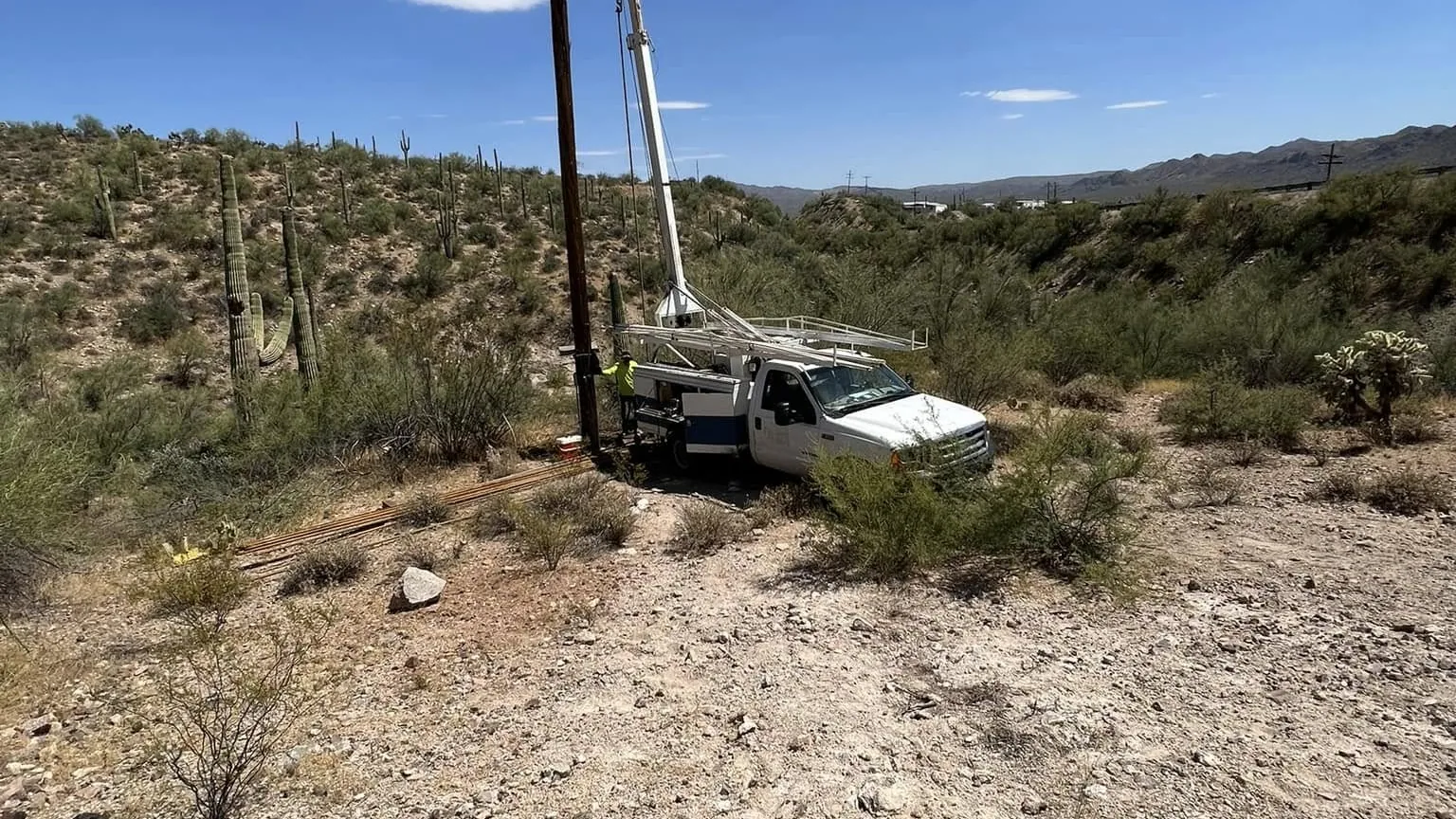
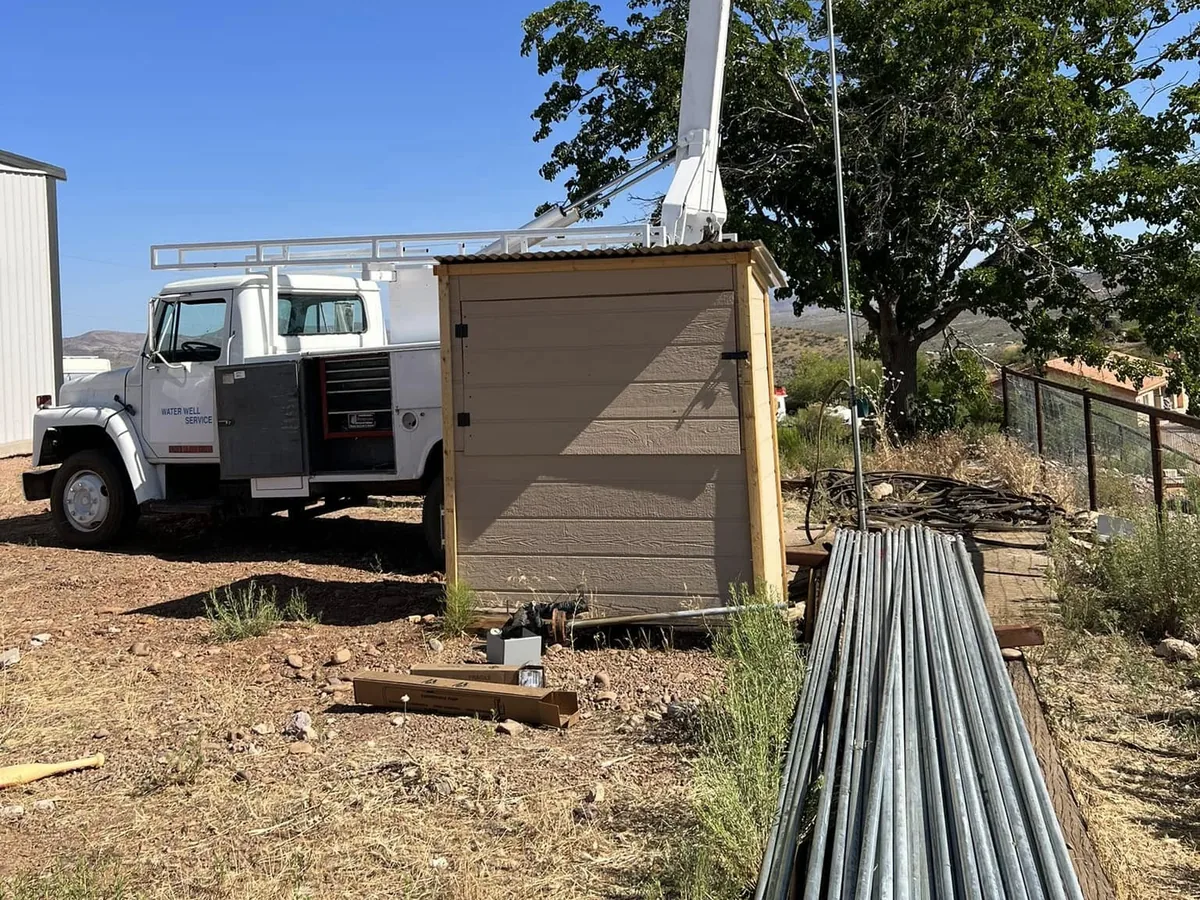
Depth changes the whole job. A deep well means more drop pipe and more wire coming out of the hole. Our own pump hoist rig does that lifting. We have set a solar pump more than 700 feet down at the end of a very rough road.
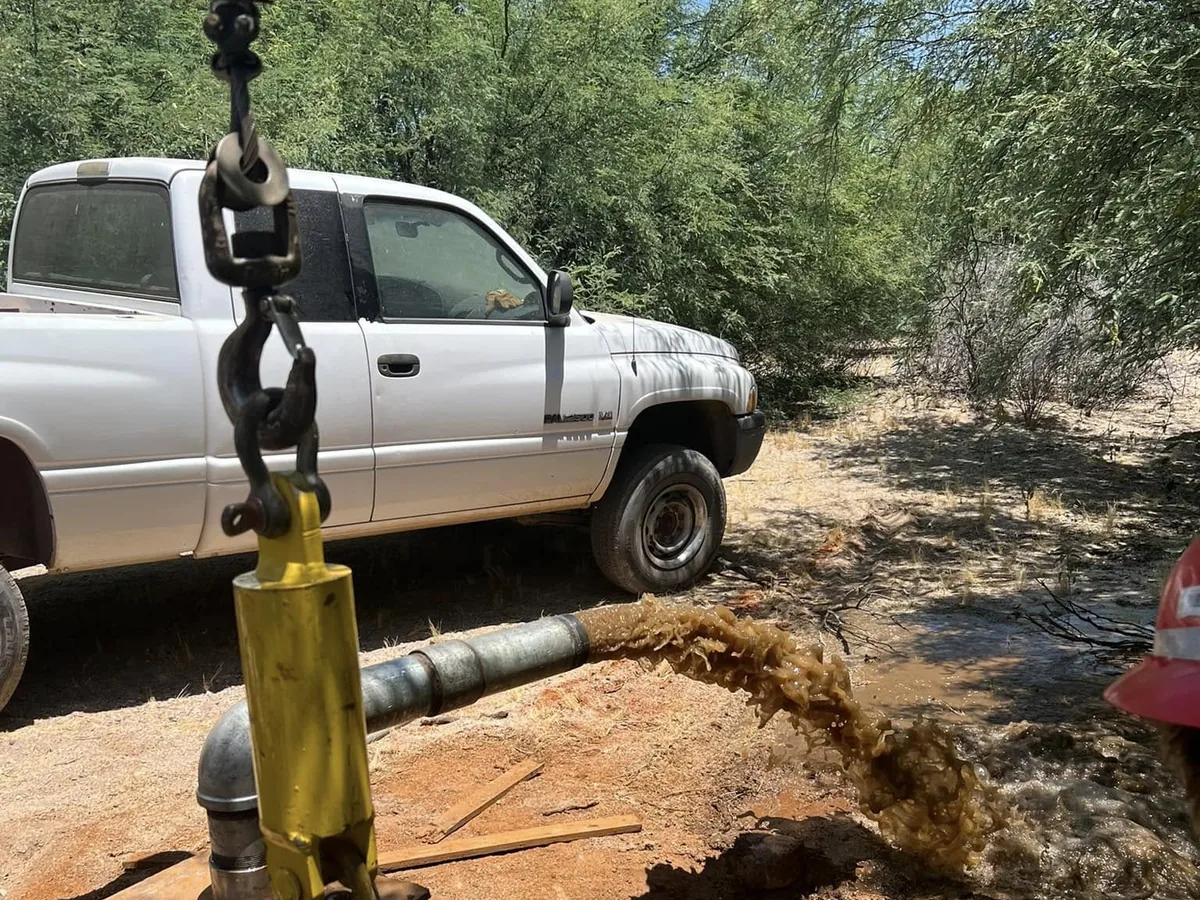
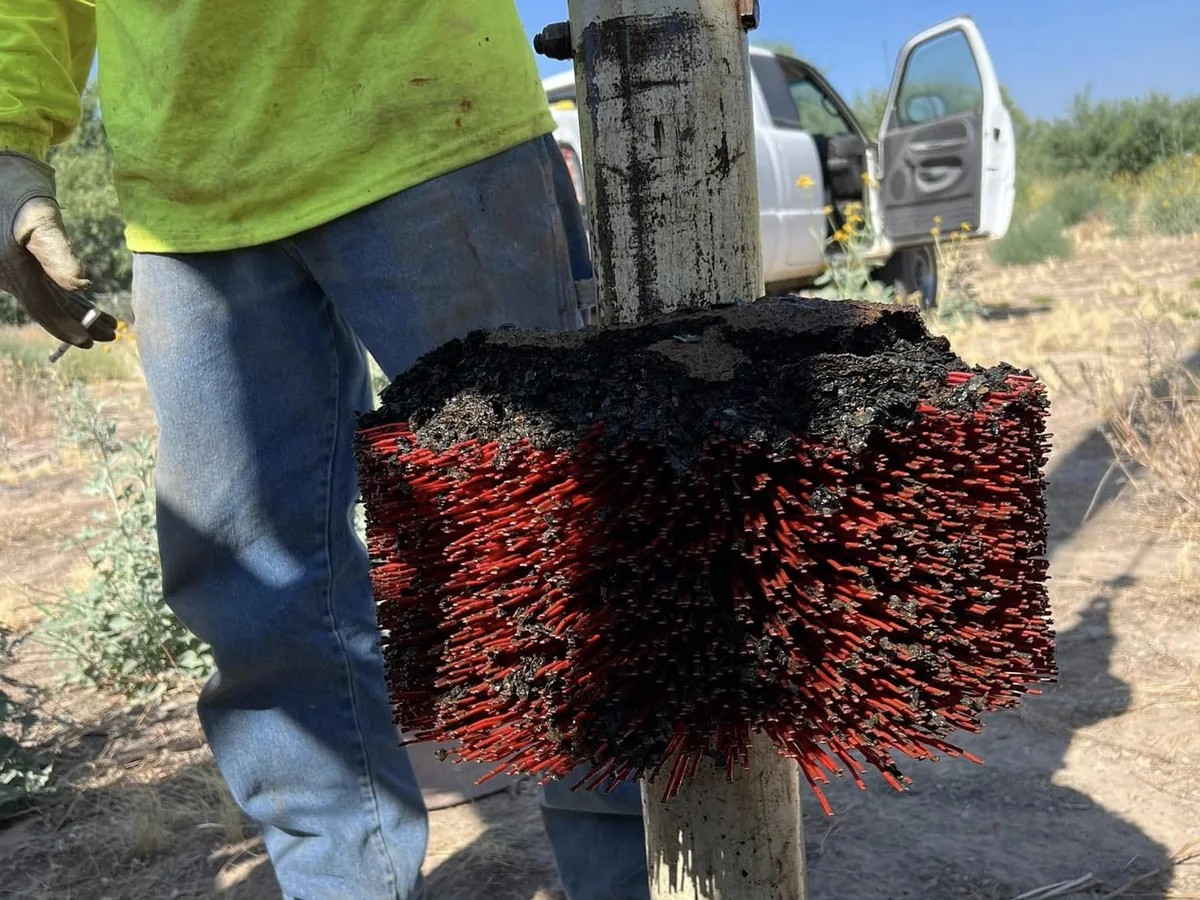
Galvanized drop pipe rots thin from the inside, and a long string of it comes up with care. When pipe or a pump breaks off down the hole, we fish it out with the rig and fishing tools. While the pump is out we look at the drop pipe, the wire, the check valves and the well seal.
Heat, lightning and monsoon storms on a Kearny well
Kearny is low desert ground at about 1,860 feet. It gets hot here, and we have pulled pumps on days above 120 degrees. Heat is hard on anything mounted in the open. That means the control box, the wire, the pressure switch and the poly line out to a tank.
Late summer brings the monsoon, and with it lightning. Lightning is rough on pump motors, control boxes and solar controllers. A pump that ran fine before a storm and will not start after one is a common call. Heavy runoff in the washes can cut a buried pipeline or scour out a wellhead.
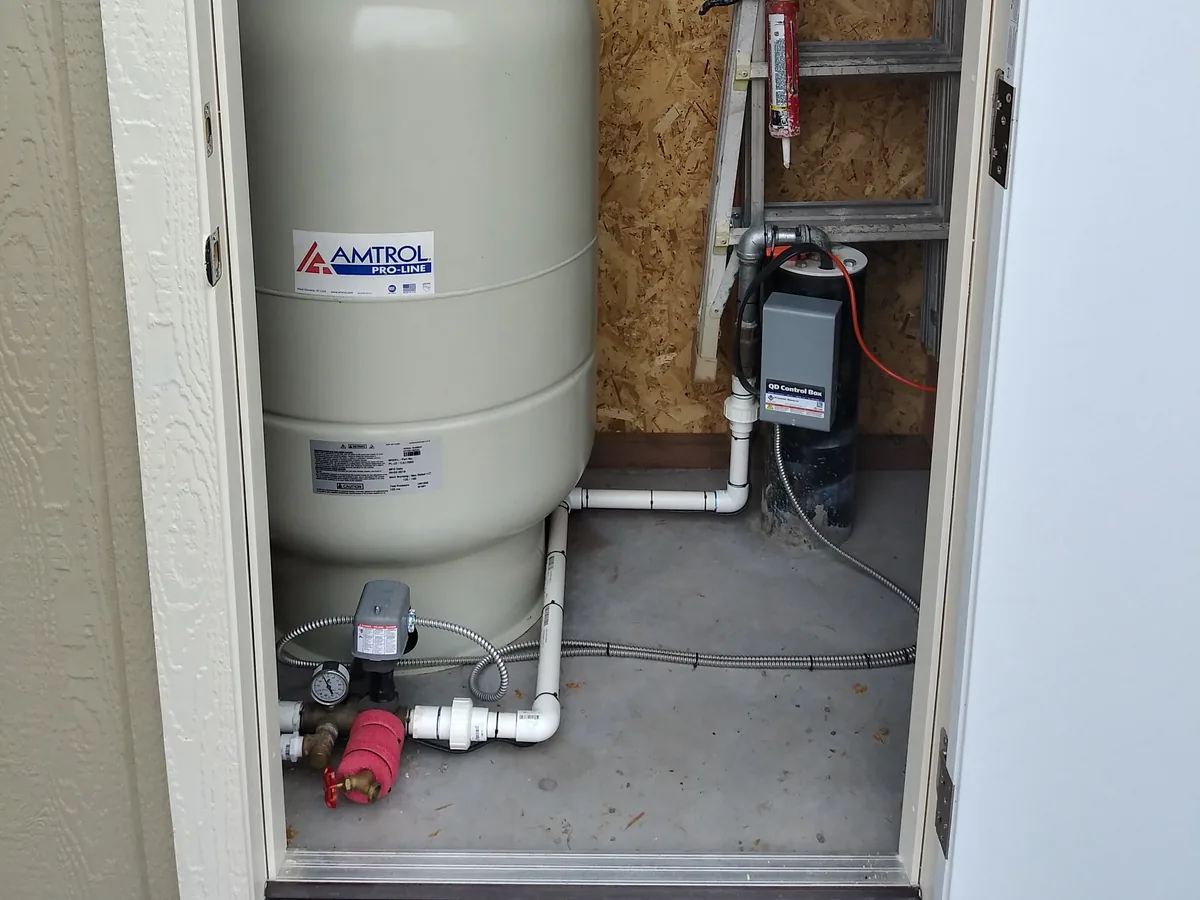
On the house side, heat shows up at the pressure tank and the switch. A tank that has lost its air charge makes the pump start and stop every few seconds. That short cycling is hard on a motor, and out here the motor sits a long way down. We test the pressure switch, the control box and the motor readings before anything gets pulled.
Ranch wells, stock water and solar around Kelvin and Riverside
We come down AZ-77 through Dripping Springs to Winkelman, then up AZ-177 along the Gila into Kearny, about 50 miles from Globe. That highway ties Kearny to Hayden and Winkelman below town, and to Kelvin and Riverside above it. The Copper Basin Railway runs alongside that road.
Out on that ground the water job is often livestock, not a house. A well fills a storage tank, the tank feeds the troughs, and a float keeps it from running over. Many stock wells out here sit a long way from the nearest power line. That is why so much of this country runs on sun.
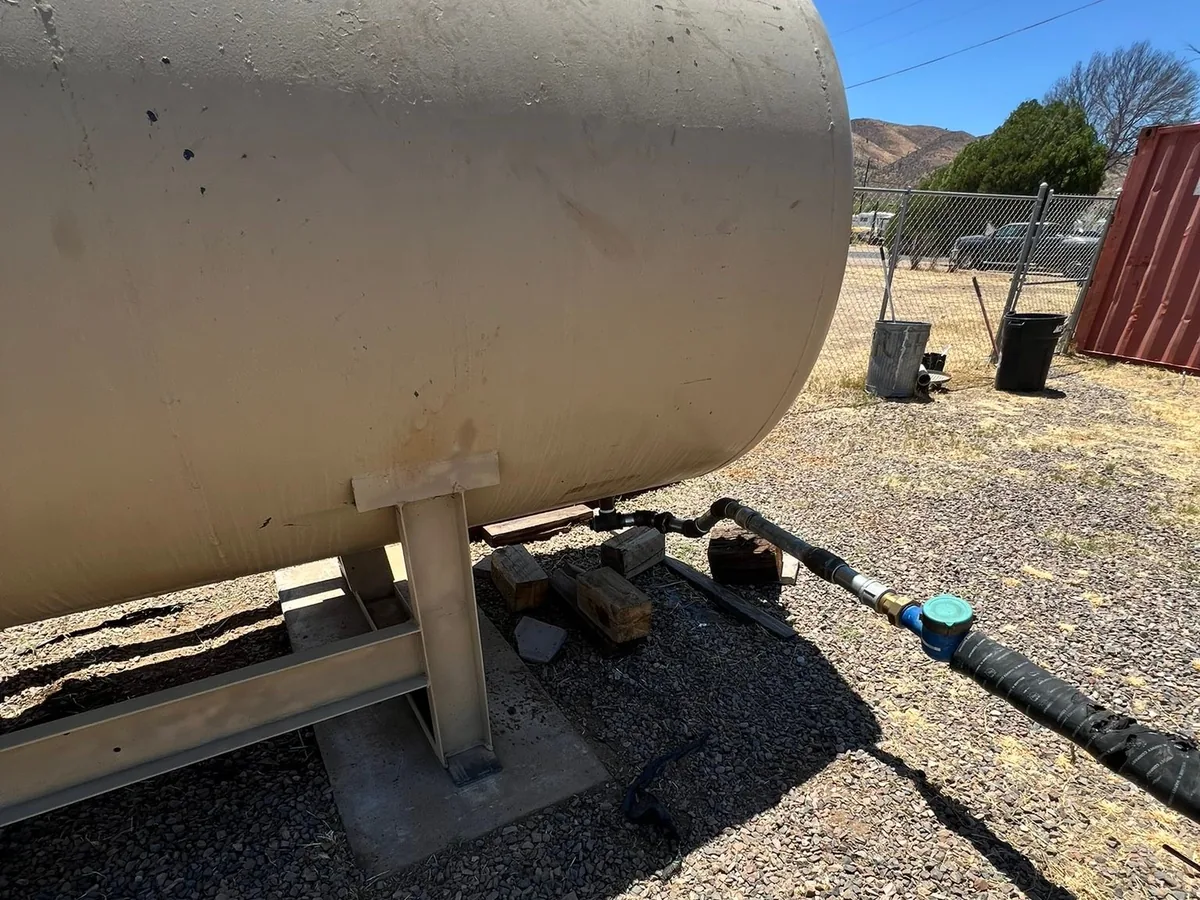
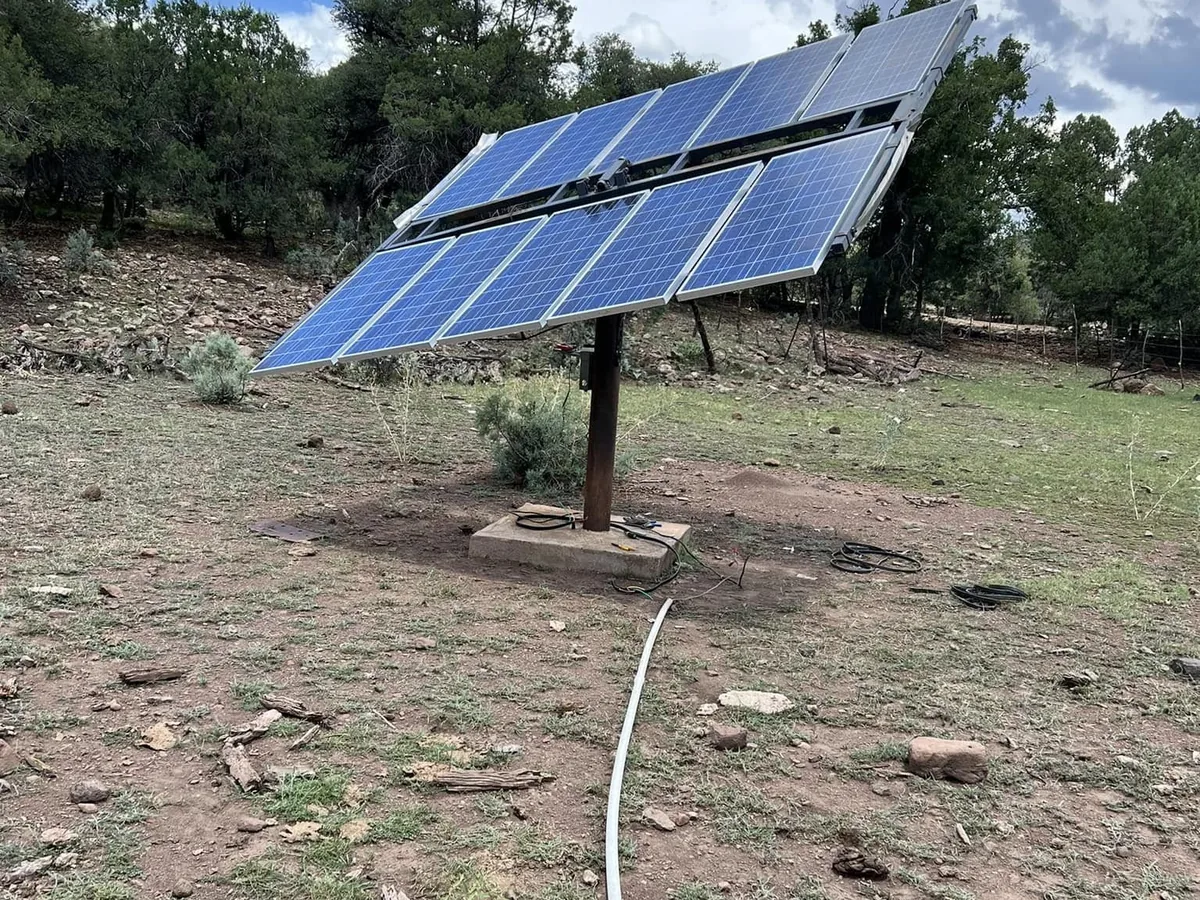
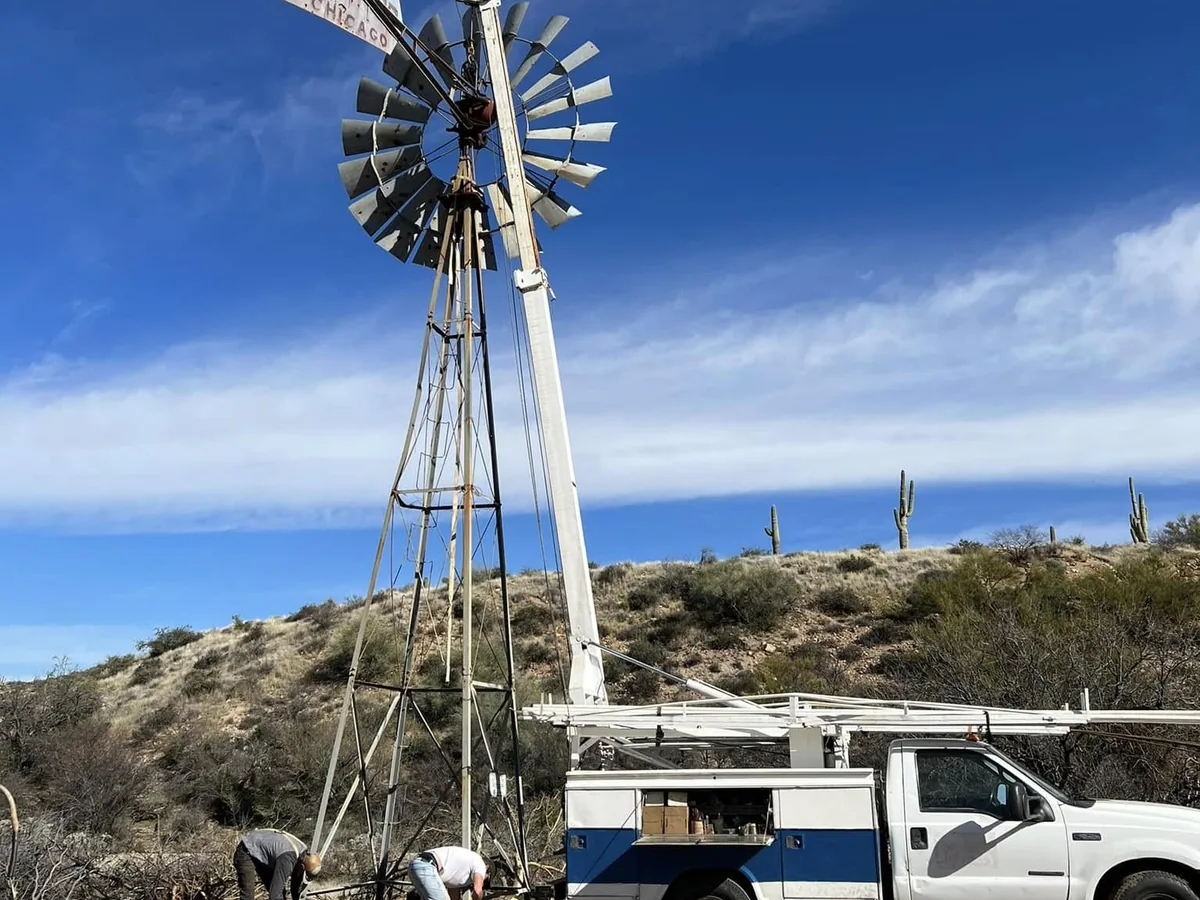
Solar well pumps use an array, a controller, a DC submersible pump and a float switch at the tank. There are no batteries, so the pump works while the sun is up and the tank carries the rest. We work on ranch windmills too, from the yearly gearbox oil change to new leathers, check valves and sucker rod. Steel and poly water storage tanks are their own work: patching, rebuilding a tank and its stand, and running pipeline out to troughs.
Communities and areas we serve around Kearny: Kelvin, Riverside, Hayden, Winkelman, Copper Basin, Mineral Creek, Ray Road, Florence-Kelvin Highway, Gila River valley.
Kearny ZIP codes served: 85137.