Why Wells Around Payson Run Slow
The rock under Payson is granite, and granite does not hold water the way sand and gravel do. Water moves through cracks in it. The USGS describes the aquifers here as local, generally shallow and variable. They sit in fractured zones of the Payson granite.
A federal study of northern Gila County found most wells in the area draw from bedrock. Under Arizona rules, a domestic exempt well is one with a pump capacity of 35 gallons per minute or less. Plenty of wells in this country make far less than that. The pump has to be sized and set to match.
Low yield changes how a pump is picked and where it hangs. Set a pump too high and it pulls air. Run it too hard on a slow well and it runs dry and cooks the motor. On wells like that we look at pump protection controls. Often the answer is a storage tank the well fills slowly.
What does 5,000 feet do to a well system?
Payson averages about 18.5 inches of snow a year, spread over six days. The record low is 9 below zero. Anything above ground freezes first. Pressure tanks in an unheated shed, pressure switches, tank tees and exposed pipe are the usual casualties. A split line or a cracked switch reads the same as a dead pump: no water at the tap.
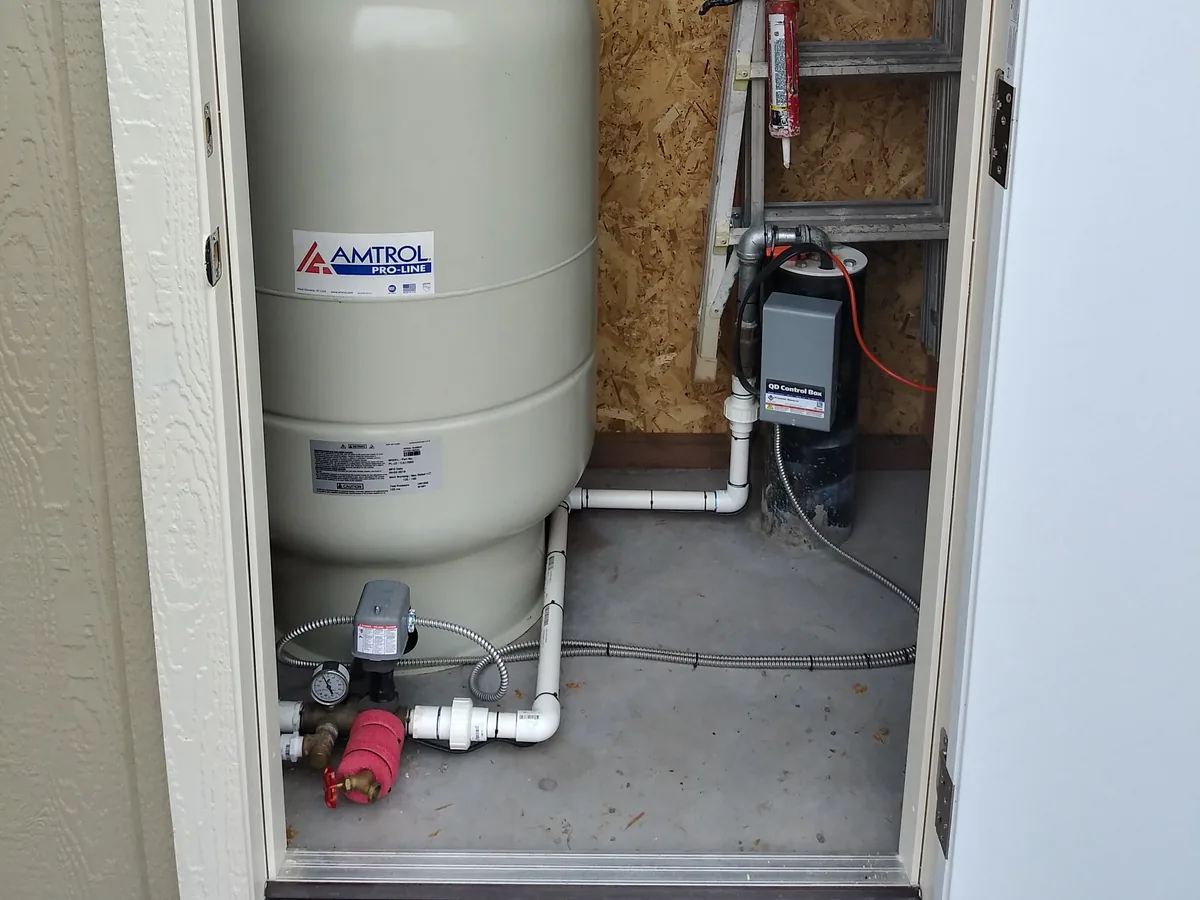
Freezing is also why pressure tank and switch work comes up so often in high country wells. A waterlogged tank makes the pump start and stop every few seconds. That short cycling is hard on a submersible motor. Setting the tank precharge to the switch is part of every tank we install.
Summer brings the other problem. About 35 percent of Payson's rain falls during the monsoon, roughly 7 inches. Those storms carry lightning, and a surge can travel the wiring into pump motors and control boxes. Pump manufacturers make surge arrestors for exactly that reason.
Ranch and Stock Water Outside of Town
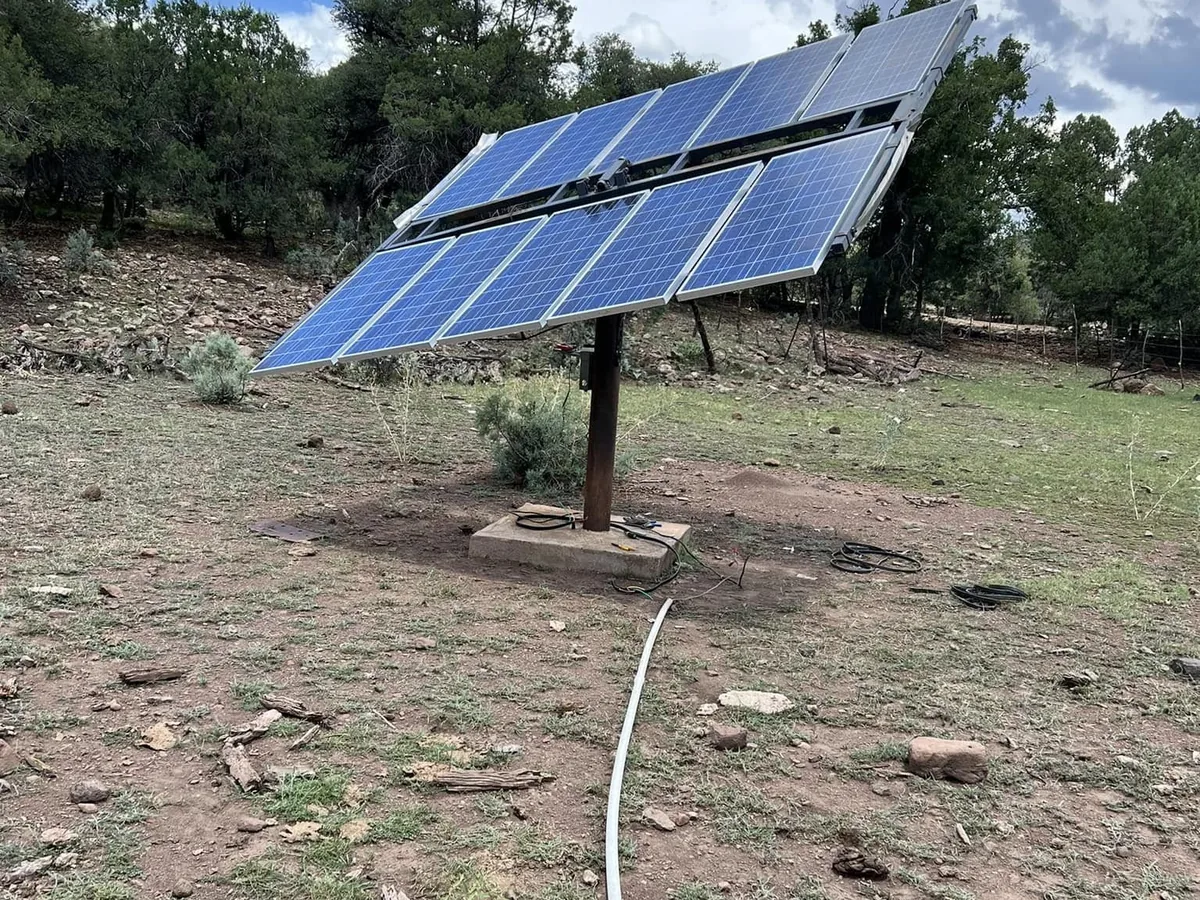
Away from town, properties get bigger and power is not always at the well. Stock tanks, troughs and off-grid cabins still need water every day. That is where solar well pump systems earn their keep. The parts are panels, a controller, a DC submersible pump and a float switch at the tank. The pump fills the tank while the sun is up, and the tank carries the place overnight.
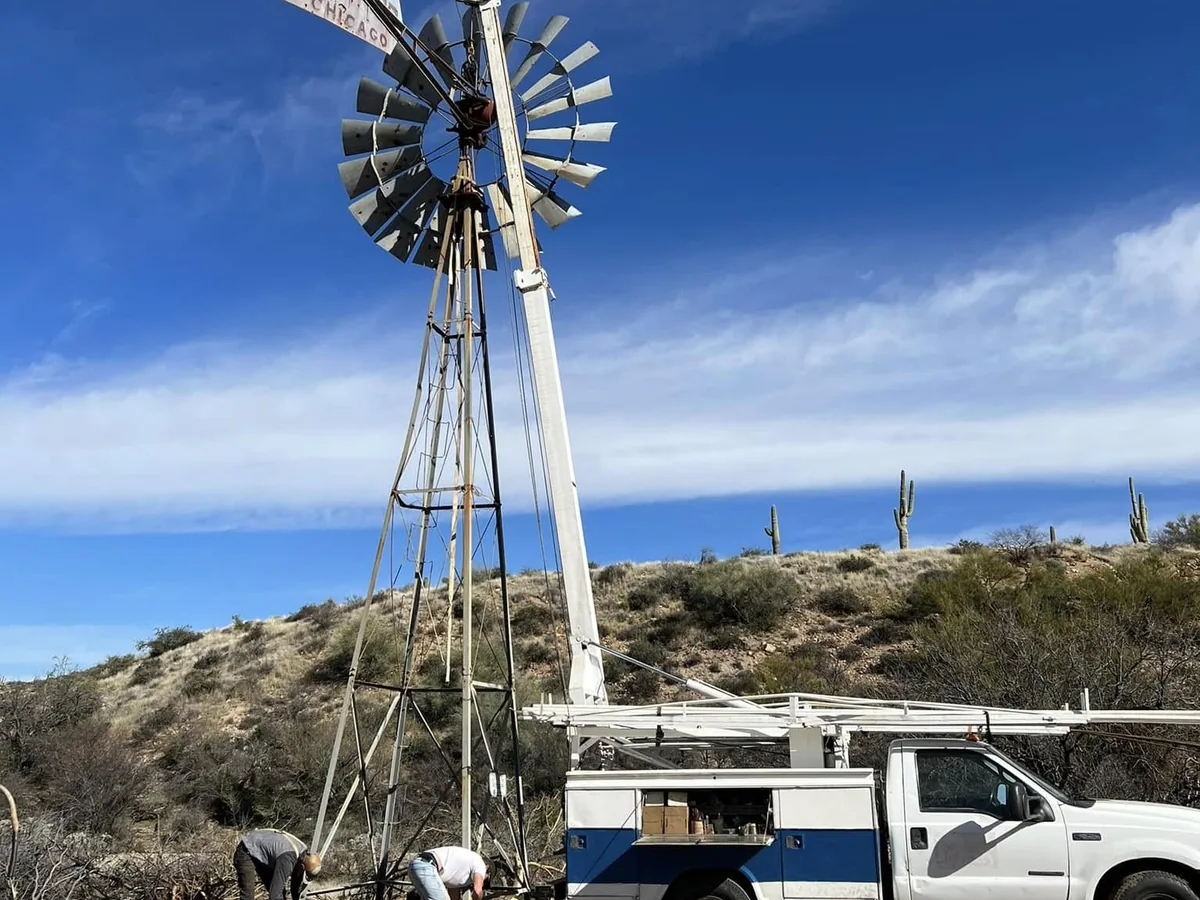
Some ranches still run water pumping windmills. We do windmill repair: the yearly gearbox oil change, new leathers and check valves in the cylinder. We also pull rod and pipe when something breaks. When a mill is past saving, converting that well to solar or electric is often the better answer.
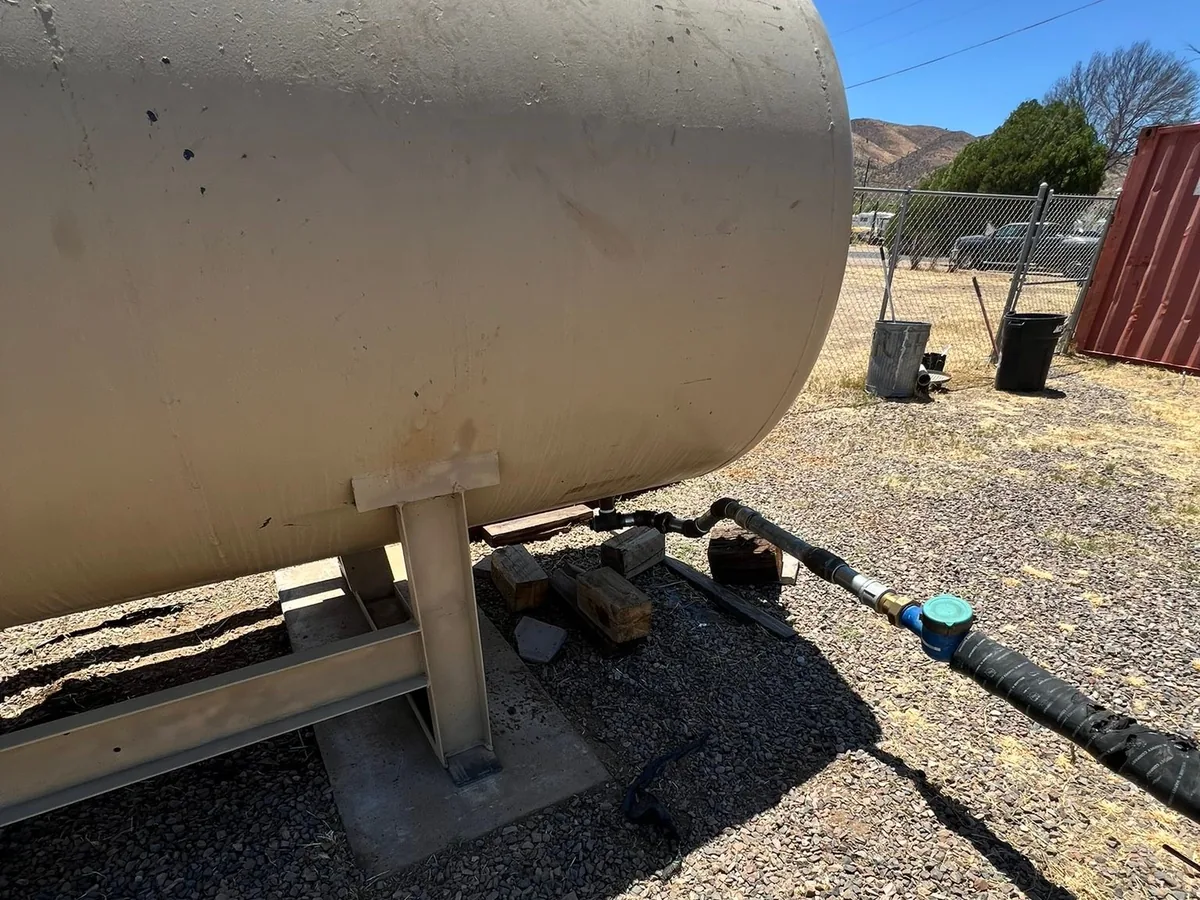
Storage is the other half of ranch water. Steel and poly tanks hold what a slow well makes overnight. We repair and rebuild steel tanks and plumb them to the well and the troughs. We set float valves and run black pipeline to where the water is needed.
Town Water, Private Wells and the ADWR Registry
Payson's town system leaned on groundwater for decades. The water table under Payson had dropped as much as 100 feet since the 1950s. The C.C. Cragin pipeline started delivering in June 2019. Salt River Project reported the water table then rose more than 60 feet in many areas.
None of that reaches a private well in Star Valley or a ranch well outside the town limits. Those owners still pump their own water. Wells on land under state jurisdiction are registered with the Arizona Department of Water Resources. The registry file often holds the driller's log, the total depth and the casing.
If you have the well's registry number, tell us when you call. The log tells us how deep the well is and what the casing looks like. That shapes the pump size, the drop pipe and the setting depth before anyone opens the wellhead.
Communities and areas we serve around Payson: Star Valley, Round Valley, Oxbow Estates, Mesa del Caballo, Diamond Point Shadows, Freedom Acres, Rye, Gisela.
Payson ZIP codes served: 85541, 85547.